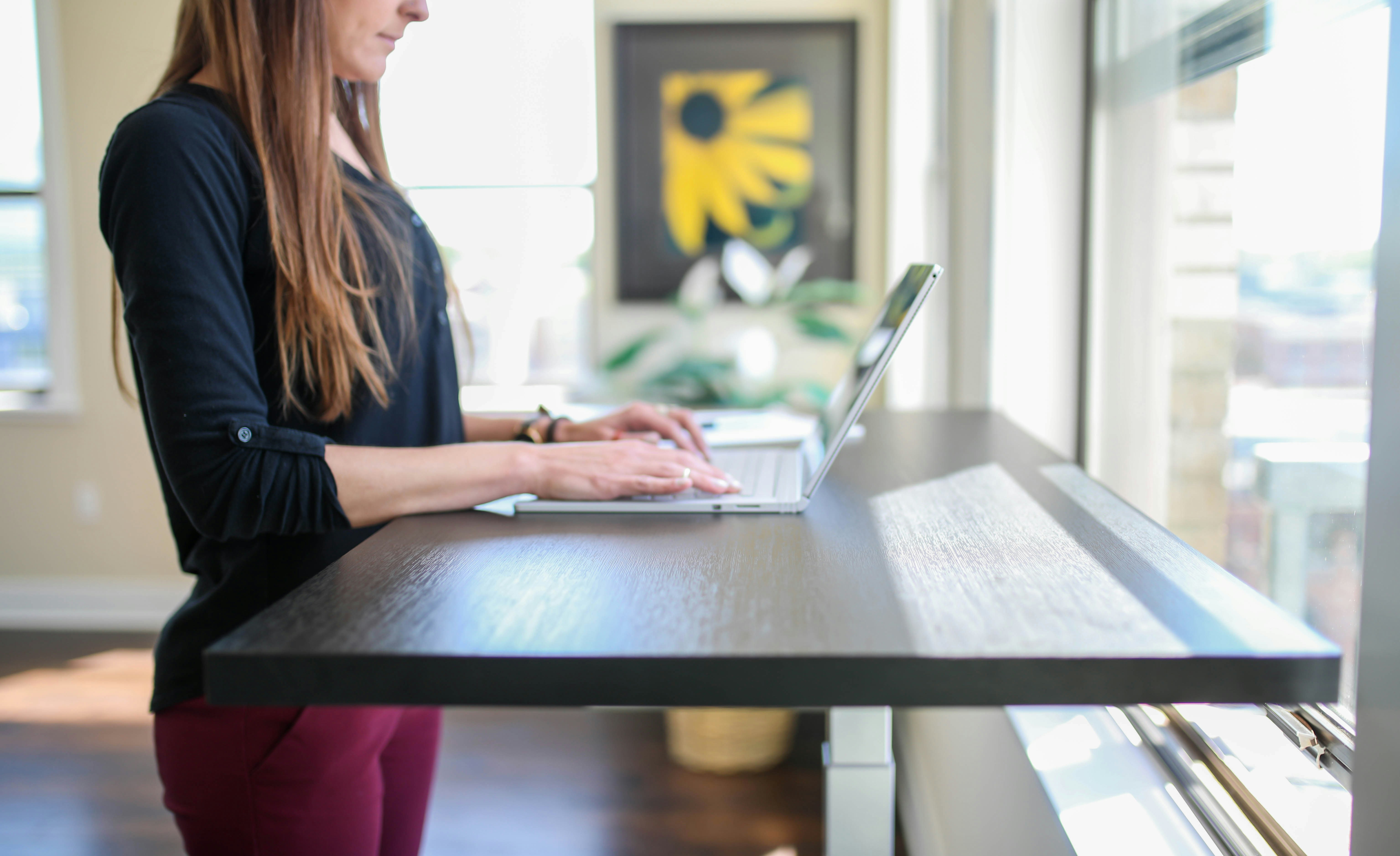
If you work in a shop, behind a reception desk, at a counter or anywhere else where you have to stand for long periods, you may be familiar with that nagging ache in your lower back that gradually gets worse as the day goes on.
You might even notice that you tend to stand in a particular way: knees locked straight, pelvis tipped forwards and a pronounced curve in your lower back.
Here's what's actually going on. When you're stuck standing for long periods, your body looks for the cheapest way to do it, energy-wise. Locking the knees out straight and letting the pelvis tip forward — increasing the curve in your lower back — is that cheap option. It feels stable. Your muscles get to switch off a bit and let your skeleton take the strain instead.
The trouble is, that stacked-up, locked-out position leans hard on structures that weren't built to bear load statically for eight hours straight — the small facet joints in your lower back, plus your hips and knees. So the very position your body chooses to save energy is the one that quietly racks up discomfort over a shift.
So rather than trying to find the perfect posture, here are a few simple things you can try.
If you tend to stand with your knees pushed firmly straight, try unlocking them slightly.
You don't need to visibly bend your knees. Just allow them to soften. This small change can allow your pelvis to move away from its forward-tilted, end-range position and reduce the amount of extension in your lower back.
You can combine this with a very gentle engagement of your tummy muscles.
Think about bringing your pubic bone very slightly closer towards your breastbone. It should be a tiny movement — almost more of a thought than an exercise. You shouldn't be bracing your stomach or sucking it in.
The aim isn't to flatten your back or hold yourself rigidly. It's simply to move away from one fixed position and find somewhere that feels more comfortable.
If your job means walking away isn't an option, this doesn't mean you're stuck being still. There's usually more room to move than it feels like.
Shift your weight from one leg to the other every so often. Put one foot slightly in front of the other and swap which one leads. Bend and soften your knees. Roll through your feet. Have a subtle stretch while you're talking to a customer or waiting for the till to load.
None of these need to be visible or disruptive. They're small enough to do while you're fully present in your job, and that's exactly the point — your joints don't need a five-minute break, they just need a change.
If your job allows it, a perching or sit-stand stool can also give your legs and back a useful change of position without stopping you from working.
Standing for hours on a hard floor can be tiring in its own right.
Make sure your shoes are comfortable and appropriate for the job. If your feet are uncomfortable, it's not surprising if the rest of you becomes uncomfortable too.
It's also worth thinking about heel height. Heels tip your pelvis forward and increase the curve in your lower back — the same pattern we talked about above, just created by your shoes rather than your posture. That's often part of why heels feel especially punishing when you're on your feet for a full shift.
An anti-fatigue mat may also help if you spend most of your working day in one place. A slightly softer surface can make prolonged standing more comfortable and may encourage the small adjustments and weight shifts that naturally happen when we stand.
You don't need a complicated piece of equipment. Sometimes a simple change to what's underneath your feet is enough to make a noticeable difference.
It's tempting to think that back pain when standing means you must be standing incorrectly.
It may be much simpler than that.
Your body is designed to make constant, small adjustments. If your job means standing in one place for hours, the best standing posture is your next one.
Soften your knees, shift your weight, roll through your feet, have a stretch where you can. You may find that your back doesn't need you to stand better — it just needs you to move a little more, even if that movement is barely visible to anyone but you.


