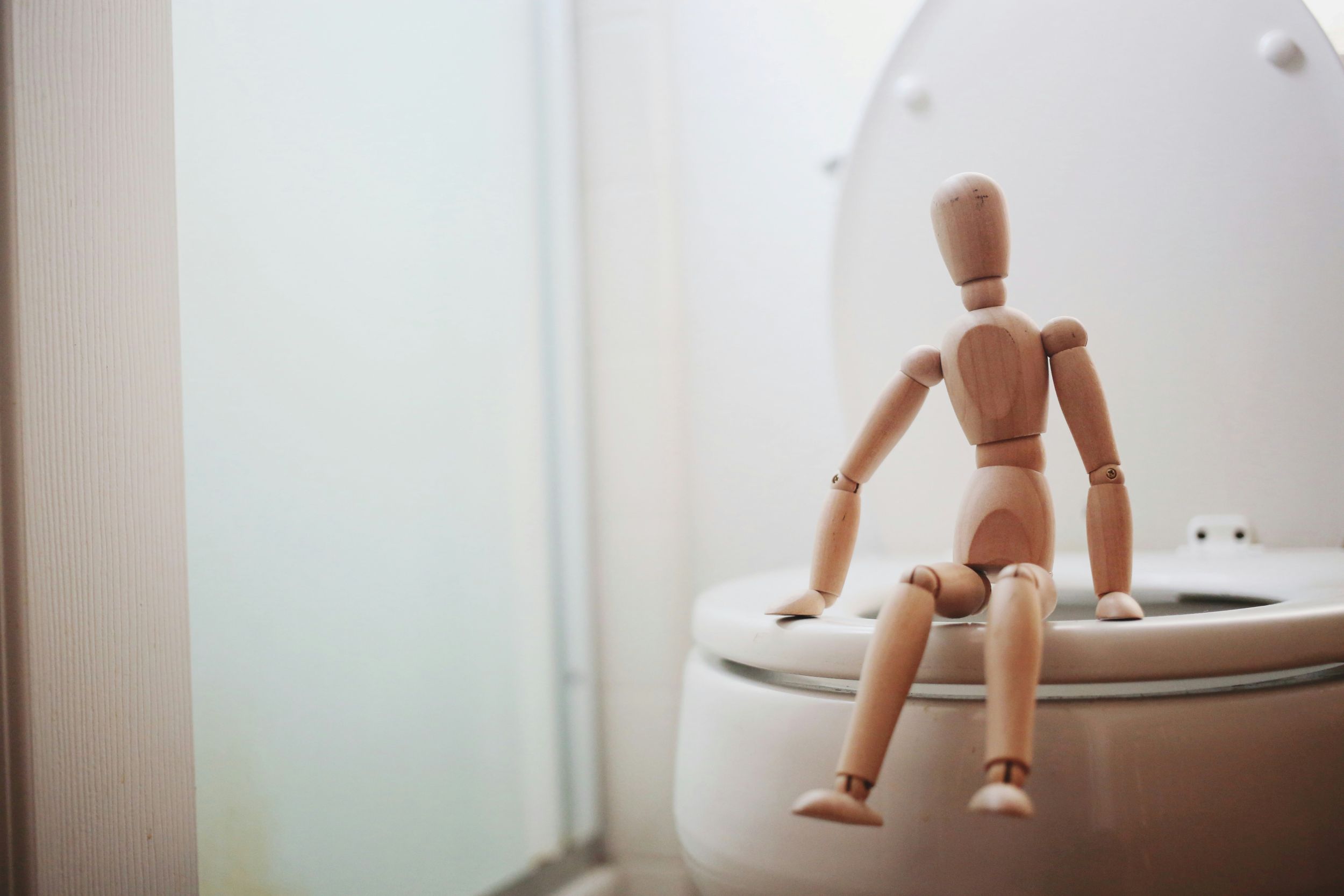
You've been out and about for hours without giving your bladder a second thought. You get home, put your key in the door and suddenly you're doing that frantic little dance, crossing your legs and desperately trying to get to the toilet before your bladder lets you down.
Did your bladder really fill up in the last 10 metres from the front door? Why does this happen every time you get within a few metres of a toilet?
This surprisingly common experience is sometimes called latchkey urgency, or latchkey incontinence when it results in leakage. And it tells us something interesting about the relationship between our bladder and our brain.
Your bladder has stretch receptors that send signals to your brain as it fills. Your nervous system processes those signals, helping you decide when you need to find a toilet and when you can comfortably wait.
But needing to wee isn't simply a matter of your bladder reaching a particular volume. Your brain plays a big part in interpreting bladder sensations and deciding when it's time to empty it.
For most of the day, you might be perfectly comfortable. Then you see your front door, hear running water or spot a public toilet, and suddenly the urge becomes almost irresistible.
The amount in your bladder hasn't changed much. What's changed is the context in which your brain is interpreting its signals.
Think about how often you've followed this sequence:
Arrive home. Find the toilet. Empty your bladder.
Over time, the sights, sounds and circumstances that come before going to the toilet become familiar cues. Your brain learns that these cues predict an opportunity to wee.
If this sounds a bit like Pavlov's dogs drooling at the sound of a bell, that's because it's the same basic idea: a conditioned response. Your front door has become your bell.
And it isn't just in your head. In some people, these cues can trigger genuine, involuntary contractions of the bladder muscle. The brain isn't only reinterpreting the signal; it's starting the process early. It's a sort of subconscious, premature sigh of relief that a toilet is nearby.
When you're away from a toilet, your brain works quietly in the background to keep you continent. When a toilet becomes available, it eases off, and postponing becomes much harder.
Urgency is that sudden, compelling feeling that you need to go. Urge incontinence is when that urgency comes with leakage. Latchkey urgency is the situational version, where a familiar cue such as arriving home sets it off.
You can have latchkey urgency without ever having an accident. But if you regularly leak before you reach the toilet, that's worth getting properly assessed.
Often, yes. Bladder training and urge-suppression techniques aim to help you regain control, rather than automatically responding to every sudden urge.
Next time the familiar emergency strikes as you approach the loo, try this:
Simply recognising the feeling as an urge rather than an emergency can help in itself. Understanding what your body is doing is often the first step to managing it.
The aim isn't to ignore a genuinely full bladder or to force yourself to endure discomfort. It's to learn that a sudden wave of urgency doesn't always need an immediate dash to the toilet.
If you regularly leak, have persistent urgency or need to go much more often than you used to, speak to your GP or a continence specialist. Bladder training helps many people, but the right approach depends on what's causing the symptoms.
See your GP promptly if you notice:
And one that's especially important for anyone with back pain: if you develop new problems controlling or feeling your bladder or bowel, alongside back pain, sciatica, or numbness around your bottom, genitals or inner thighs, seek medical help the same day. Call 111 or go to A&E. This can be a sign of cauda equina syndrome, which needs urgent treatment.
The latchkey toilet emergency is a useful reminder that what we feel isn't a direct readout of what's happening inside us.
The bladder sends signals, the brain interprets them, and past experience shapes the response. Pain works in a very similar way: the sensation you feel is your nervous system's best interpretation of the situation, coloured by context and expectation, not a simple measure of what's happening in your tissues.
So next time you find yourself frantically fumbling with your keys, remember: your bladder probably hasn't suddenly filled up. Your brain may simply have decided that waiting is no longer necessary.
You don't have to pop a sweet in your mouth every time you pass a bowl of them, and you don't have to take a pee every time you pass the loo.


